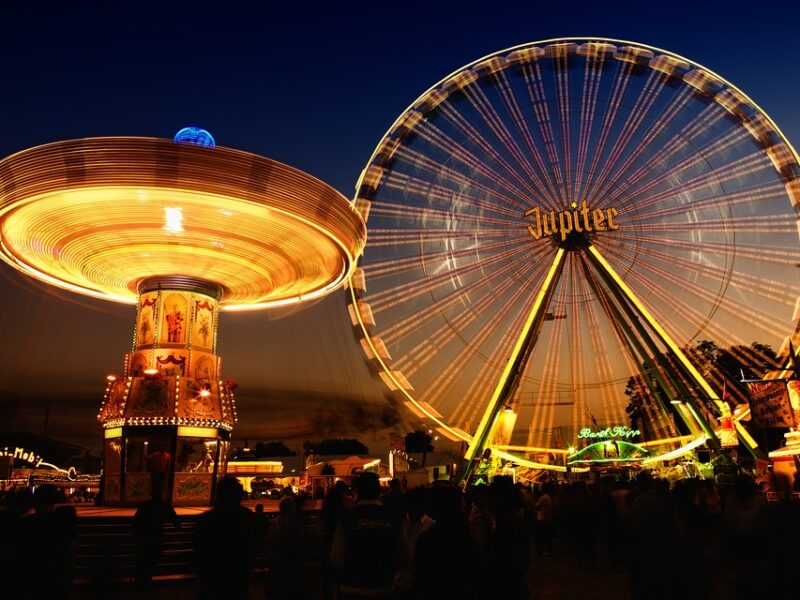

Fairs thrive on one of the oldest human motivations: the reward of discovery. People go to festivals and markets because they want the pleasant uncertainty of “what will I find?” That might be a new food, a handmade item, a surprising performance, or a small tradition that becomes a yearly habit. The fair environment turns wandering into a purpose. It gives visitors permission to explore, and it gives vendors a stage to create an emotional connection in a short time. This is why fairs remain powerful even in an era where almost anything can be purchased online. The fair sells a feeling, not only a product.
That reward mindset isn’t limited to in-person events. Digital entertainment uses similar psychology: anticipation, novelty, and small incentives that make participation feel more exciting. In the same way that a fair might attract visitors with seasonal themes, contests, or special attractions, online platforms may highlight extras such as a Fugu Casino bonus to signal that something additional is available beyond the basic experience. The mechanism is familiar: the promise of added value creates attention. The important difference is that a fair naturally ends—closing time arrives, the gates shut, the day finishes—while digital entertainment can continue indefinitely unless the user sets boundaries.
Understanding this contrast helps people enjoy both worlds without falling into unhealthy patterns. At a fair, the structure protects visitors. The environment encourages breaks: watching a show, sitting to eat, walking between zones. Even long fair days contain natural pauses. Digital entertainment, by contrast, can remove pauses and compress time. A short session can quietly become hours if the experience is built around constant loops. That is why balance requires deliberate design on the user’s side.
The fair format offers a useful lesson: experiences are best when they have a clear beginning, a satisfying middle, and a clean end. Visitors arrive with a plan (even if it’s just “browse and relax”), they explore, they choose a few highlights, and they leave with a memory. Digital leisure becomes healthier when it follows the same pattern. A practical method is to treat online sessions like a planned fair visit: decide the time window before starting, decide the budget limit if spending is involved, and decide what “done” looks like. When the planned endpoint arrives, stop. That single habit prevents the most common problem of modern entertainment: drifting without noticing.
For vendors and organizers, the reward mindset also explains how to improve fair engagement ethically. People are drawn to interactive moments—demos, tastings, mini-workshops, small competitions—because these feel like “earned rewards” rather than passive marketing. A visitor who learns something or participates in a small challenge feels ownership of the experience. That ownership turns into loyalty. The key is to keep interaction respectful and transparent. Rewards should never feel manipulative; they should feel like a fair exchange for attention and time.
The same ethical principle applies to digital entertainment. Incentives can be enjoyable, but the healthiest use is within limits. A user who enters a session already tired, stressed, or trying to “fix” a bad mood is more likely to lose control of time and spending. Fairs rarely encourage that kind of isolation; they are social and grounded in real surroundings. Online sessions can become isolating if they replace rest, sleep, or real recovery. A strong safety rule is simple: avoid paid entertainment when exhausted or emotionally unstable. If the goal is relaxation, choose an activity that truly restores energy—walk, food, conversation, or sleep—before returning to digital leisure later.
Another useful fair lesson is budgeting. Many visitors arrive with a spending plan: a certain amount for food, a certain amount for crafts, and maybe one “special purchase” if they find something truly unique. That budget makes the day fun because it removes anxiety. Online entertainment benefits from the same mindset. Spending should be treated as a planned cost of leisure, never as a strategy to recover losses or chase outcomes. If a limit is reached, the session ends—just like a fair day ends when the wallet (or the energy) says it’s time.
Finally, fairs remain popular because they offer controlled excitement. The visitor experiences novelty, but within a safe environment—rules, staff, schedules, and community norms. Digital entertainment can also be enjoyable when it is placed inside a safe container: clear time limits, clear spending limits, and a calm decision-making state. When those boundaries exist, incentives stay fun and the experience stays light.
Fairs remind people that the best experiences don’t need to be endless. They need to be well-shaped.: a day with highlights, pauses, and a proper ending. Bring that same structure into digital leisure, and entertainment becomes what it should be—an enjoyable part of life, not something that steals time, money, or peace.